
Your First Month Teaching Abroad: Realities, Challenges and Solutions

Your First Month Teaching Abroad: Realities, Challenges and Solutions
What to Expect in Your First Month Teaching English Abroad
So, you’ve quit your job, stuffed your suitcase, and bought yourself that one-way ticket. But what actually happens next - you know, that moment when you step off the plane and walk into your new classroom? I’ll never forget my first days arriving in Warsaw. I basically imagined I’d be some kind of teaching superstar by the end of week one. Well, actually... let’s just say things didn’t go quite like the daydreams. That first month? It’ll sweep you off your feet. Honestly, it’s a mix of excitement, confusion, and a million small hiccups you probably never saw coming. You’ve probably read loads of the usual ‘embrace the adventure!’ blogs, but let’s be real: those don’t tell you how up and down you’ll feel. Especially if you’re moving from a comfy UK routine (morning Greggs, rain, and the 7:42 to London Bridge sound familiar?) to a place where you can’t even get your favourite tea. Or explain to your landlord why the plumbing makes that noise.- Overwhelm: You get hit with information overload in the first week. New faces, staff WhatsApp groups, new acronyms. Your head might honestly throb.
- Isolation: Yep, there will be a few lonely evenings before you make proper friends. WhatsApp calls home are good - but they’re not the same as a night at your local pub quiz.
- Practical headaches: Opening a bank account, cracking public transport, buying a SIM card - these all take ages and test your patience.
- Classroom reality check: Your first lesson? It’ll almost certainly go sideways. Don’t let it get to you - everyone messes up at the start (I prepped for days and still fluffed my opener!)
- Moments of pure joy: But there’ll be flashes - a student’s grin, a lesson that actually works, the first time you manage to order a coffee in the local language all by yourself.

Navigating Culture Shock: Adjusting to Life and Work Overseas
No one really warns you about culture shock being more than just missing home. It can pop up out of nowhere - like, right in the middle of a lesson or just while you’re standing paralysed in a supermarket aisle, confused by 20 bags of rice you’ve never seen before. Supposedly, there are four stages of culture shock, but in my experience, you’ll bounce between “honeymoon” and “What on earth have I done?” for weeks. I remember an hour spent in a Seoul post office just trying to post a letter home and leaving empty-handed, feeling ridiculously defeated.- Language barriers: Not catching instructions from your boss, or missing every staffroom joke. Can be brutal at first.
- New working norms: Hierarchies are strict in places like Japan, super chilled in Spain. You’ll have to figure it out quickly.
- Unexpected customs: Bowing in Thailand. Never showing your feet’s soles in Turkey. Sometimes nobody tells you these things until you get it wrong.
- Work-life balance: Some places expect you to hang out after work, others not at all. Easy to feel like an outsider at first.
- Food and daily routines: Lunch at 2pm. Shops always closed on Sundays. Your comfortable habits go out the window - and it’s weird for a while.
Pro Tip: Keep a little notebook just for local lingo and customs. You’ll avoid awkward slip-ups and break the ice with colleagues way faster.
Culture shock messes with your head. Professionally, you might second-guess every bit of feedback and feel lost in staff meetings. Personally, you might end up desperately Googling “where to find English tea in Prague” or just wanting a walk in the park.
But - and this is the good bit - facing all this makes you adapt. You’ll get more patient, more empathetic, and you’ll properly learn to laugh at your own blunders. If you’re struggling, just remember: it genuinely does get easier. And if you need a rant, someone at our team gets it. We’re only a message away.
Classroom Realities: The Truth About Your First Lessons
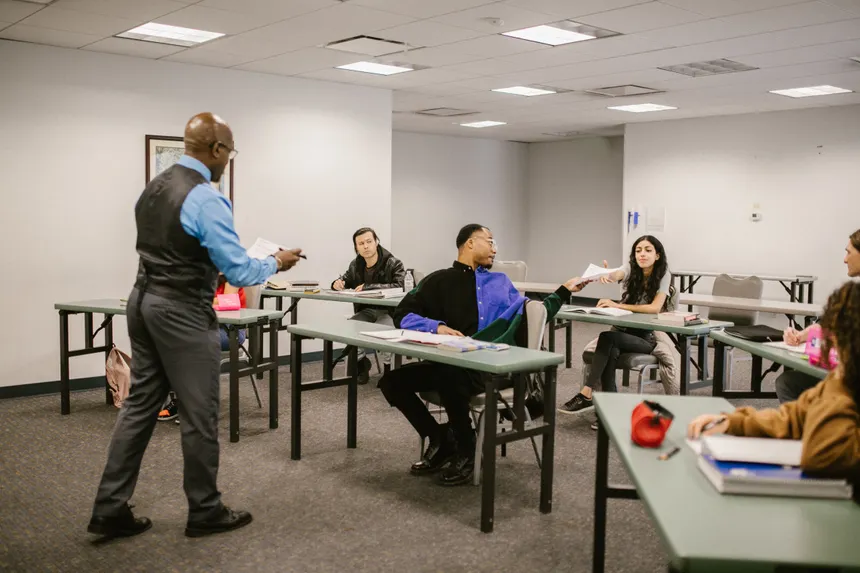
Let’s get real about that first day at the front of a classroom abroad. You probably practised your lesson plan, maybe even rehearsed your “hello, I’m your teacher” speech in the hotel bathroom. But then there you are, and suddenly half your class is glued to their phones, one kid is fast asleep, and the only textbook on offer looks like it survived the '90s. Every classroom is its own little world. In Milan, my students actually argued grammar points with me (and, to be fair, they were usually right). In a Vietnamese village, my teens were so shy I had to lean in to hear them say their names. Keeps you sharp!- Behaviour surprises: What’s disruptive in a British school might be fine in South Korea, and the opposite is true as well.
- Staffroom politics: Some schools are super friendly and open, others a bit cliquey. You might get lunchtime invites - or get left figuring stuff out solo.
- Resource gaps: Not every school has fancy gear. Sometimes you’re lucky if you have working chalk. Improvising becomes second nature.
- Student expectations: Some groups want old-school lectures, others want games and group work. There’s no formula. You work it out as you go.
- Feedback culture: Some managers are brutally honest, others barely say a word. Totally depends on the country and the school.
I’ve had days I forgot my USB or finished an activity and suddenly had 40 minutes left - just me, the chalkboard, and 20 expectant faces. That’s when you learn to improvise. But those are also the moments when real connections start. Students, colleagues, even the cleaner who chucks you a sympathetic smile as you search for the right classroom - it all adds up."Your first lesson will rarely go as planned. The students might test you, the tech might fail, and your nerves will show. But that’s how you learn. Flexibility is the most valuable skill you can bring."
- Priya Patel, Student Success Manager, TEFL Pro

Comparing Teaching Conditions: Popular Destinations for UK Teachers
Honestly, your first month will feel different depending on where you end up. From what I’ve seen, expectations and support can vary massively between somewhere like Prague, Shanghai, or Buenos Aires. Here’s a quick comparison (definitely ask for more details if you need them):| Country | Monthly Salary Range | First Month Support |
|---|---|---|
| Spain | £1,000-£1,350 | Orientation, shared accommodation, moderate resources |
| China | £1,600-£2,500 | Airport pick-up, paid induction, bilingual admin team |
| Vietnam | £900-£1,500 | Minimal induction, housing allowance, peer mentors |
| UAE | £2,000-£3,200 tax-free | Comprehensive onboarding, private flat, HR support |
| Poland | £800-£1,100 | Brief induction, friendly staff, basic materials |
Essential Survival Tips for Your First 30 Days Abroad
Your first month? It’s honestly all about adapting. You need way more than just a good grip of grammar to settle in. After helping hundreds of teachers make the leap, here’s what actually makes a difference (and no, it isn’t just ‘say yes to everything’):- Start your routine early. Even if it’s just a coffee each morning from the same café, that tiny bit of normal can keep you grounded.
- Learn five must-know phrases in the local language. Hello, thank you, sorry, “Where is...?”, and “I don’t understand.”
- Find your support crowd. Fellow teachers, expats, even the friendly shopkeeper who remembers your name.
- Stay flexible with your expectations. Some days, just not missing the right bus will feel like a major victory.
- Take quick lesson notes after class. What flopped? What worked? Saves your brain next time around.
- Don’t be shy about asking questions - even if they feel silly. Most folks are nice and happy to help.
- Protect your own time. If you’re suddenly being asked to do unpaid overtime, it’s okay to say no. Be clear and polite, but firm.
Pro Tip: Bring along some home comforts before you go. Trust me, a box of Yorkshire Tea or a stash of Dairy Milk does wonders when you’re having “one of those days.”
Homesickness hits most people hard at first. Plan regular catch-ups with friends and family, but also force yourself out now and then. One teacher I placed in Prague ended up joining a salsa class, not because she loved dancing (she didn’t!), but it was a way to meet people. That class changed everything for her - plus, she met her partner there. Small choices matter.
And don’t ignore your health. Register with a local doctor early - and keep your insurance info handy. You’ll be glad if you wake up with a fever and need an English-speaking GP.
If you want more practical help, pop over to our free TEFL resources or the FAQ section.
Learning from Mistakes: Real Stories from New UK TEFL Teachers
No one forgets their first classroom mishap. I still go a bit red remembering when I mixed up “borrow” and “lend” in a class in Kraków. The students’ faces were priceless. But honestly? That’s where the learning happens. Here are some real gems from TEFL teachers who made it through the first month:- “My first week in Madrid, I pretended to get the staff WhatsApp jokes. Eventually I admitted defeat - a colleague clued me in and saved me from accidentally volunteering for the Christmas show.”
- “Tried to impress my Seoul class with a Britpop song. Imagine dead silence - turns out, nobody knew Oasis. Now I always check what’s popular locally first.”
- “Thought I’d have loads of spare time in Vietnam. Didn’t realise lesson planning would eat up so many evenings - batch planning is my saviour now.”
- “Panicked the first time I had to cover a class with zero notice. Now I always keep a ‘just-in-case’ folder of printables and easy games.”
Honestly, mistakes are going to happen. Every “fail” is just practice for next time - and you’ll end up a better teacher, and, well, probably a more relaxed human being too. Most people you meet are generous when they see you’re trying. And if you’re stuck, the TEFL Pro crowd always has your back (plus, we’ve all got our own embarrassing stories if you need a laugh)."The best advice I got? Laugh at yourself. The students will respect you more if you admit you’re learning too."
- Sophie Evans, TEFL Teacher, Madrid
Insight from Industry Experts: Setting Yourself Up for Long-Term Success
Here’s the blunt truth: your first month isn’t just about surviving. It’s about picking up habits that’ll make your whole contract smoother (and life a bit happier). The data backs it up too - teachers who get a proper induction and find a helping hand early are way more likely to finish their year abroad. But even if you do all the right prep, tough days will come. The good news? You’re never in it alone.So what actually helps? Here’s a combo of expert advice and what I’ve seen work for real teachers:"Roughly 40% of new TEFL teachers report feeling overwhelmed in their first month, but those who seek support early go on to thrive."
- James O’Connell, International TEFL Recruitment Specialist
- Find yourself a mentor - just someone with a bit more experience who’ll give you honest, no-nonsense advice.
- Keep a journal. Write the highs and lows. Helps you spot patterns (and reminds you how far you’ve come).
- Don’t skimp on self-care. Burnout sneaks up quick when everything’s new. Try to eat, sleep, and get outside - make it a priority.
- Be open when people give you feedback. The best teachers keep learning, always.
- Ask for help early. Lesson plan panic, awkward parent meeting, whatever it is - don’t wait until you’re exhausted.
Take the Leap: How TEFL Certification Prepares You for the Unexpected
Here’s something nobody shouts about: your TEFL course isn’t just about ticking off a qualification. It’s your survival kit for those wild first weeks. When I started out, even I underestimated how often I’d fall back on stuff from my Level 5 TEFL certificate - especially all those “plan B” hacks and classroom tricks for when things go sideways.
Pro Tip: Don’t lose those notes and assignments from your TEFL course. When you’re desperate for a last-minute icebreaker or template, you’ll thank yourself for keeping them.
A good TEFL course gives you two things: confidence, and the flexibility to adjust on the fly. You’ll know how to handle blank stares, how to change your lesson plan last minute, how to spot a cultural faux pas before it blows up. And when you do mess up (spoiler alert: everyone does!), you’ve got ways to bounce back.
If you’re serious about making it through your first job overseas, get training that actually covers classroom management, cultural know-how, and lesson planning you’ll use every day. You’ll honestly thank yourself the first time you walk in to find a group of lively 12-year-olds waiting Monday morning. And if you’re still not sure? Have a look at our TEFL courses or drop us a message - everyone on the team’s been there, and we’ll give it to you straight. And probably tell you a cautionary tale or two. Because, let’s face it, your first month teaching abroad is going to be wild, unpredictable, sometimes messy, and often out of your comfort zone. But it’ll also probably be the best, most rewarding leap you ever take. And you won’t be on your own."A good TEFL certification isn’t just about theory. It’s about equipping teachers with real-world solutions to real-world problems. The first month abroad is proof of that."
- Hannah McCarthy, Senior Trainer, TEFL Pro